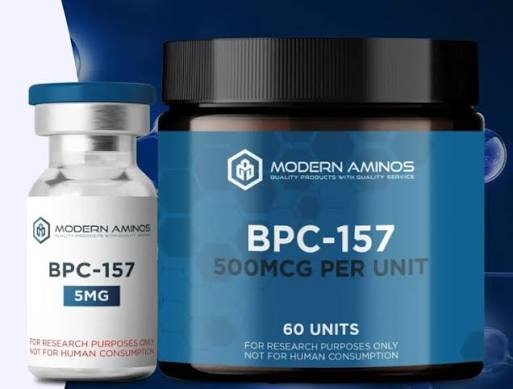
Modern Aminos: High-Purity Compounds for Laboratory Research
Modern Aminos: The Complete Guide to High-Purity Research Compounds
Scientific research relies heavily on chemical precision, molecular stability, and absolute compound purity. In laboratories worldwide, modern aminos are transforming how researchers approach biochemical pathways, peptide synthesis, and pharmacological analysis. These advanced amino acid formulations and peptide sequences offer unprecedented reliability for controlled experimental studies.
Understanding the underlying mechanics of these specialized chemical tools is essential for academic institutions, private research facilities, and scientific professionals aiming to generate reproducible data.
What Are Modern Aminos and Why Do They Matter in Science?
At their foundation, amino acids are organic compounds composed of nitrogen, carbon, hydrogen, and oxygen. When linked together via peptide bonds, they form peptides and proteins that dictate fundamental biological mechanisms. However, the term modern aminos refers specifically to high-purity, laboratory-grade amino acid complexes, synthetic peptides, and specialized biochemical reagents tailored for non-commercial research applications.
Unlike basic dietary supplements, these research-grade formulations undergo extensive purity testing to eliminate contaminants, heavy metals, and manufacturing byproducts. When working with cell cultures, enzymatic assays, or molecular modeling, even microscopic impurities can compromise entire datasets.
By utilizing standardized chemical standards—such as verified CAS numbers, IUPAC naming conventions, and exact molecular weights—modern aminos give researchers full control over experimental variables.
Primary Applications of Modern Aminos in Laboratory Settings
The versatility of modern aminos spans multiple disciplines within life sciences and organic chemistry. Their unique biological signaling properties allow scientists to study metabolic pathways, neurochemical responses, and cellular repair processes in controlled environments.
Peptide Synthesis and Protein Engineering
Synthesizing custom peptide sequences requires ultra-pure starting materials. High-grade amino building blocks prevent unwanted side reactions during liquid or solid-phase synthesis, resulting in higher yield and correct peptide folding.
Neuroscience and Receptor Binding Studies
Certain amino acid derivatives and specialized compounds act as neurotransmitters or modulate central nervous system pathways. Researchers utilize pure amino derivatives to investigate receptor affinity, signal transduction, and neuroprotective mechanisms.
Metabolic and Cellular Kinetics
In biochemical research, tracking how cells consume, transform, and store nutrients requires baseline consistency. Modern aminos allow scientists to observe precise metabolic changes without interference from unverified chemical additives.
How Modern Aminos Enhance Experimental Accuracy and Reproducibility
Reproducibility is the cornerstone of scientific research. When an experiment cannot be replicated by peer laboratories, the research loses its foundational validity. Incorporating verified modern aminos directly addresses variance issues by providing exact concentration profiles, reliable solubility parameters, and documented shelf-life parameters.
High-purity compounds reduce structural noise during high-performance liquid chromatography (HPLC) and mass spectrometry analysis. As a result, experimental data remains clear, distinct, and actionable across successive testing cycles.
Evaluating Quality: Key Criteria for Selecting Research-Grade Aminos
Selecting reliable scientific chemicals requires careful evaluation of vendor standards and documentation. When souring modern aminos for scientific research, laboratories look for specific indicators of quality control:
Third-Party Certificates of Analysis (CoA): Verified laboratory reports confirm the compound’s purity percentage and check for impurities.
Traceable Chemical Identifiers: Standardized records including CAS numbers, IUPAC nomenclature, and PubChem references.
Batch Consistency: Lot-specific documentation demonstrating consistent manufacturing and storage protocols across batches.
Strict Regulatory Compliance: Transparent guidelines stating compounds are intended exclusively for laboratory research and non-clinical experimentation.
Best Practices for Handling and Storing Modern Aminos
To maintain the chemical integrity of modern aminos, scientific personnel must follow proper laboratory protocols:
Temperature Control: Storage requirements vary; many lyophilized peptides and liquid amino compounds require refrigeration ($2^\circ\text{C}$ to $8^\circ\text{C}$) or deep freezing ($-20^\circ\text{C}$) to prevent degradation over time.
Reconstitution Precautions: When working with lyophilized powders, scientists use sterile bacteriostatic water or appropriate solvents to ensure complete dissolution without damaging delicate molecular structures.
Contamination Prevention: Utilizing sterile pipettes, working under laminar flow hoods, and minimizing freeze-thaw cycles protect compounds from airborne microbes and ambient degradation.
The Future Outlook for Modern Aminos in Scientific Innovation
As molecular biology and metabolic research continue to evolve, demand for custom synthetic peptides and highly pure amino acid complexes is accelerating. Future advancements in automated peptide synthesis and high-throughput screening rely heavily on the availability of reliable starting materials.
Through rigorous quality assurance and standardized production, modern aminos remain a pivotal component in unlocking new insights across pharmacology, molecular genetics, and biochemical engineering.
Visit also : zingyzon.co.uk
What is the primary purpose of modern aminos?
Modern aminos are specialized, high-purity amino acids and peptide formulations engineered primarily for laboratory research, chemical synthesis, and biochemical analysis.
Are modern aminos safe for human consumption?
No. High-purity modern aminos designed for chemical research are strictly intended for laboratory experimentation and non-clinical studies; they are not formulated or approved for human consumption or therapeutic use.
How do researchers verify the purity of modern aminos?
Purity is verified using advanced analytical techniques such as High-Performance Liquid Chromatography (HPLC) and Mass Spectrometry (MS), alongside third-party Certificates of Analysis (CoA).
Why is batch-to-batch consistency important for aminos research?
Batch consistency ensures that experimental results are repeatable and reliable, preventing unknown chemical variations from altering study outcomes or corrupting scientific data.
What is the best way to store research-grade peptide compounds?
Most research-grade peptides and modern aminos should be stored in a cool, dry place away from direct light, with reconstituted solutions generally requiring sub-zero or refrigerated temperatures to maintain stability.