Garden & Patio Design: A Complete Homeowner’s Guide
Garden and Patio Design: A Practical Guide to Better Outdoor Living
Garden and patio design is the process of planning outdoor living spaces — planting beds, hardscaping, seating areas, and traffic flow — so they work with your climate, soil, and daily habits instead of against them. Done well, it turns an empty backyard into a space you actually use every week, not just a spot that looks nice in photos.
A good garden and patio design starts with three things: understanding your site (sun, soil, drainage, and climate zone), defining how you’ll actually use the space (dining, lounging, play, growing food), and choosing materials and plants that survive your local conditions with minimal upkeep. Skipping any one of these is the most common reason outdoor projects underperform or need expensive redoing within a few years.
Why Outdoor Space Planning Matters More Than It Used To
Patios and gardens have shifted from optional extras to functional rooms. Families use them for meals, remote work calls, exercise, and downtime, often across three or more seasons a year. That shift changes the design math: a patio that only looks good isn’t enough anymore — it needs to hold up to daily use, weather swings, and changing needs over time.
The upside is real. A well-planned outdoor area can:
- Add usable living space without the cost of an interior addition
- Increase home value (real estate appraisers commonly cite outdoor living upgrades among the higher-return renovations)
- Lower maintenance costs long-term when plants and materials are matched to the site
- Improve daily quality of life by creating a low-effort spot to unwind
How to Plan a Garden and Patio Layout (Step by Step)
Step 1: Assess Your Site Before You Design Anything
Walk your yard at different times of day and note:
- Sun exposure — full sun (6+ hours), partial shade, or full shade
- Drainage — where water pools after rain
- Soil type — sandy, clay, or loam (a basic $15 soil test kit will tell you)
- Views and privacy — what you want to frame or block
- Existing utilities — buried lines, septic fields, or easements that limit digging
Skipping this step is the single biggest cause of failed landscaping projects, because plants and structures get placed based on how a space looks on day one rather than how it behaves year-round.
Step 2: Define the Space’s Job
A patio meant for quiet morning coffee needs a different layout than one built for weekend dinners with twelve people. Before picking materials, decide:
- Primary use (dining, lounging, cooking, gardening, play)
- Number of people it needs to comfortably seat
- Whether it needs shade, wind protection, or privacy screening
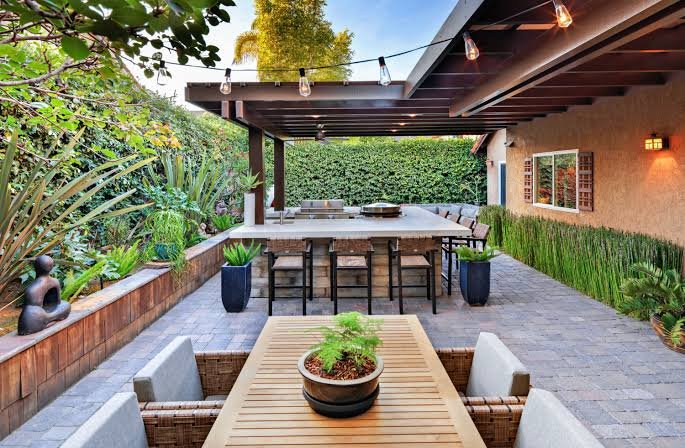
Step 3: Choose Hardscape Materials for Your Climate, Not Just Your Eye
| Material | Best For | Maintenance | Approx. Cost Range (per sq ft, installed) |
|---|---|---|---|
| Poured concrete | Modern look, large flat areas | Low | $6–$12 |
| Natural stone (flagstone) | High-end look, uneven-ground tolerance | Medium | $15–$30 |
| Pavers (concrete/brick) | Freeze-thaw climates, repairability | Low–Medium | $10–$20 |
| Gravel | Budget projects, good drainage | Medium (needs edging/refresh) | $3–$8 |
| Wood decking | Elevated spaces, softer look | High (sealing/staining) | $15–$35 |
Prices vary significantly by region and labor costs — treat these as planning ranges, not quotes.
Step 4: Match Plants to Conditions, Not Trends
The most common and costly mistake in garden design is choosing plants for their appearance in a nursery display rather than their fit with your USDA hardiness zone, soil, and sun exposure. A plant that isn’t suited to your zone will require constant intervention — extra water, winter protection, replacement — to survive, which erases any time or cost savings from the initial “cheap” purchase.
Practical rule of thumb: for every plant on your list, confirm it’s rated for your hardiness zone and matches your yard’s actual sun exposure before buying, not after.
Common Mistakes in Garden and Patio Design
- Designing for photos, not function. A striking layout that ignores foot traffic or seating comfort gets used less over time.
- Ignoring drainage. Water pooling near a patio slab can undermine the base and crack hardscaping within a few years.
- Overplanting. Small plants spaced for their mature size can look sparse at first, but overcrowding leads to disease and stunted growth later.
- Skipping a maintenance budget. Every material and plant choice carries an ongoing time or cost commitment — factor that in before installation, not after.
- Building without a use plan. A patio without a clear primary purpose often ends up as unused square footage.
Best Practices for a Low-Maintenance, Long-Lasting Outdoor Space
- Start small and expand. A modest patio that gets finished and used beats an ambitious one that stalls halfway through.
- Group plants by water needs (hydrozoning). This cuts watering time and reduces the risk of over- or under-watering different species planted together.
- Use native or regionally adapted plants where possible. They typically need less water and fewer pesticides once established.
- Leave room for growth. Space trees, shrubs, and perennials for their mature size, even if the bed looks empty in year one.
- Plan lighting and shade early, not as an afterthought — retrofitting electrical or pergolas is more expensive than including them in the original plan.
Garden vs. Patio: What’s the Real Difference?
| Feature | Garden | Patio |
|---|---|---|
| Primary material | Soil, plants, mulch | Hard surface (stone, concrete, pavers) |
| Main function | Growing, aesthetics, habitat | Seating, dining, gathering |
| Maintenance type | Ongoing (watering, pruning, weeding) | Periodic (cleaning, resealing) |
| Seasonal change | High — visibly changes through the year | Low — structure stays constant |
| Typical cost driver | Plant selection, soil prep | Material choice, square footage |
Most well-used backyards combine both, with the patio acting as the functional “room” and the garden as its surrounding frame.
Key Takeaways
- Assess sun, soil, and drainage before choosing any materials or plants.
- Define the space’s actual use before designing its layout.
- Match plants to your hardiness zone and site conditions, not visual trends alone.
- Budget for ongoing maintenance, not just installation.
- Combining a functional patio with a well-matched garden gives the best long-term return on effort and cost.
FAQS
What is the cheapest way to design a patio?
Gravel or a simple poured-concrete pad are typically the lowest-cost options, generally running $3–$12 per square foot installed depending on region and site prep needed.
How do I know my USDA hardiness zone?
You can check it using the USDA Plant Hardiness Zone Map by entering your ZIP code; it tells you the average minimum winter temperature range for your area, which most plant tags reference directly.
Do I need a professional for garden and patio design?
Small, simple projects (a basic paver patio, a few planting beds) are often manageable as DIY projects. Larger projects involving grading, drainage correction, structural elements, or electrical/gas lines for outdoor kitchens usually benefit from a licensed landscape professional.
How much does professional landscape design typically cost?
Design fees vary widely by region and project scope; many designers charge either a flat project fee or an hourly rate, so it’s worth requesting quotes from a few local professionals for an accurate range.
What’s the best time of year to start a garden and patio project?
Hardscaping (patios, walkways) can generally be done in most seasons where the ground isn’t frozen. Planting is best timed to your local climate — typically early spring or fall in most temperate zones, to let roots establish before extreme heat or cold.
How do I stop water from pooling on my patio?
Proper grading is the main fix — patios should slope slightly (about a 1–2% grade) away from the house to direct water off the surface rather than letting it collect.
Can I combine a vegetable garden with a patio design?
Yes — raised beds near a patio are a common layout that keeps food gardens accessible for daily tending while staying visually integrated with the seating area.
How often should patio pavers or concrete be resealed?
This depends on material and climate, but many pavers and concrete surfaces benefit from resealing every 2–3 years to protect against moisture, staining, and freeze-thaw damage.
Conclusion
A successful garden and patio design isn’t about chasing the latest look — it’s about matching your layout, materials, and plant choices to how your site actually behaves and how your household actually lives. Start with a clear-eyed assessment of sun, soil, and drainage, define what each space needs to do, and choose materials and plants built for your specific climate rather than a showroom display. Get those fundamentals right, and the outdoor space you build will still be working for you — with less upkeep and fewer surprises — years down the line.