Why Home Improvement Is Important (And Where to Start)
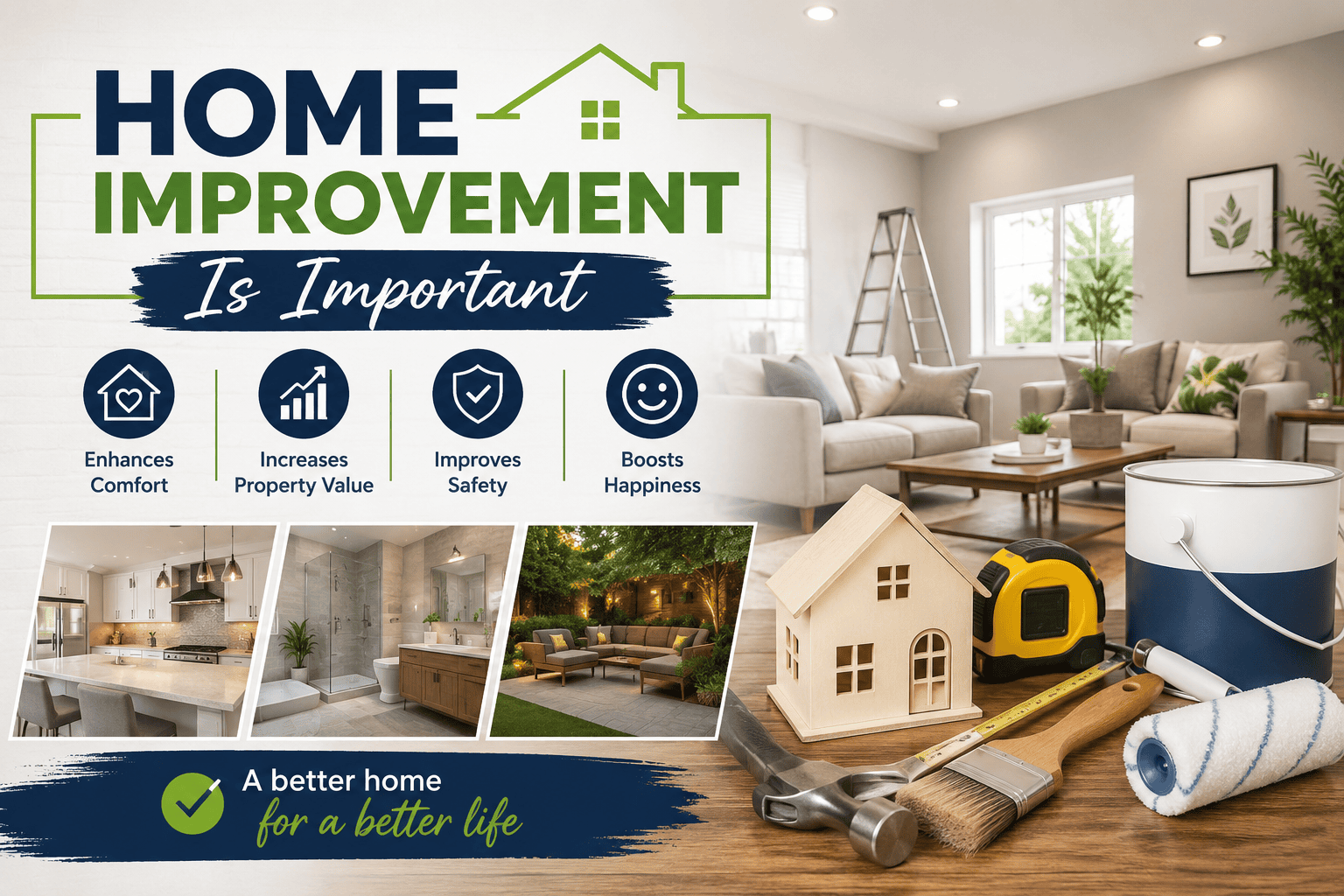
Home improvement matters because it protects your property’s value, keeps your home safe and efficient, and directly affects how comfortable daily life feels. Beyond aesthetics, regular upkeep and upgrades prevent small issues from becoming expensive repairs, lower energy costs over time, and make a home better suited to how you actually live. Sites like mintpalhouse.com cover this territory as home-and-garden blogs, offering design ideas and project inspiration — useful for direction, though specifics like cost and material advice are worth confirming with a local contractor or supplier
What Does “Home Improvement” Actually Cover?
Home improvement is a broad term for any work done to maintain, repair, upgrade, or renovate a property — from a fresh coat of paint to a full kitchen remodel. It spans three general categories: maintenance (keeping existing systems working), repair (fixing what’s broken), and renovation (upgrading or changing a space). Understanding which category a project falls into helps set realistic expectations for cost, timeline, and return on investment.
Why Home Improvement Is Important: The Short Version
Direct answer: Home improvement is important because it preserves property value, prevents costly future repairs, improves energy efficiency, and makes a home safer and more comfortable to live in. Neglected homes deteriorate faster and cost more to fix later, while well-maintained homes tend to hold or increase their value over time.
The Core Reasons Home Improvement Matters
1. It Protects (and Often Increases) Property Value
Homes are one of the largest financial assets most people own, and their condition directly affects resale value. Buyers and appraisers factor in the age and condition of a roof, HVAC system, plumbing, and structural elements — deferred maintenance on any of these can lower an appraisal even if the interior looks updated.
2. It Prevents Small Problems From Becoming Expensive Ones
Direct answer: A small, cheap fix today often prevents a much larger, more expensive repair later — a $200 roof patch now can prevent a $10,000 water damage claim in a few years.
Common examples:
| Small Issue Now | What Happens If Ignored |
|---|---|
| Minor roof leak | Structural water damage, mold growth |
| Cracked caulking around windows | Drafts, higher energy bills, wood rot |
| Slow plumbing drain | Pipe damage, potential flooding |
| Worn weatherstripping | Higher heating/cooling costs |
| Small foundation crack | Structural instability over time |
3. It Improves Energy Efficiency and Lowers Costs
Upgrades like better insulation, energy-efficient windows, and updated HVAC systems reduce monthly utility costs and make a home more comfortable in extreme temperatures. These improvements often pay for themselves over several years through lower energy bills, even though the upfront cost can be significant.
4. It Directly Affects Daily Comfort and Wellbeing
A home that functions well — good lighting, enough storage, efficient layouts — makes everyday life easier. Poor lighting, cramped storage, or an inefficient kitchen layout create small frictions that add up over time. This is part of why home and design resources, including blogs like mintpalhouse.com, focus heavily on layout and function rather than just visual style.
5. It Supports Safety
Home improvement isn’t only cosmetic — updated electrical systems, secure railings, proper ventilation, and working smoke detectors are safety essentials that fall under general home upkeep. These projects rarely get attention until something goes wrong, which is exactly why proactive maintenance matters.
Home Improvement vs. Home Renovation: What’s the Difference?
| Term | Definition | Example |
|---|---|---|
| Maintenance | Routine upkeep to keep systems working | HVAC filter changes, gutter cleaning |
| Repair | Fixing something broken | Patching a leak, replacing a broken window |
| Improvement | Upgrading function or efficiency | New insulation, updated fixtures |
| Renovation | Larger-scale change to a space | Full kitchen or bathroom remodel |
Knowing which category a project falls into helps with budgeting — maintenance and small repairs are ongoing and relatively inexpensive, while renovations require more planning and larger upfront costs.
Common Mistakes People Make With Home Improvement
Prioritizing looks over function. A beautifully painted room with poor lighting or inadequate storage will feel worse to live in than a plainer room that actually works for daily use.
Delaying maintenance until something breaks. Reactive repairs almost always cost more than proactive maintenance, especially for roofing, plumbing, and HVAC systems.
Skipping permits or professional input on structural work. DIY enthusiasm is great for cosmetic projects, but electrical, plumbing, and structural work usually requires a licensed professional and, often, a permit — skipping this can create safety issues and complicate a future home sale.
Over-improving for the neighborhood. High-end renovations don’t always return their full cost at resale if they significantly exceed what’s typical for the area — it’s worth researching comparable homes before a major investment.
Best Practices for Approaching Home Improvement
- Start with an inspection, not a wish list. Identify what actually needs attention — roof condition, HVAC age, plumbing issues — before deciding on cosmetic upgrades.
- Budget for maintenance annually, not just when something breaks. A general rule some professionals use is setting aside roughly 1% of a home’s value per year for upkeep, though this varies by home age and condition.
- Tackle safety and efficiency projects first, then move to cosmetic upgrades. A safe, efficient home is the foundation everything else builds on.
- Get multiple quotes for larger projects. Costs for renovations can vary significantly between contractors, and pricing should be confirmed locally rather than assumed from national averages.
- Use design blogs and inspiration sites for ideas, not final decisions. Sites like mintpalhouse.com can be useful for layout and style inspiration, but always verify material costs, contractor credentials, and code requirements independently before committing to a project.
Key Takeaways
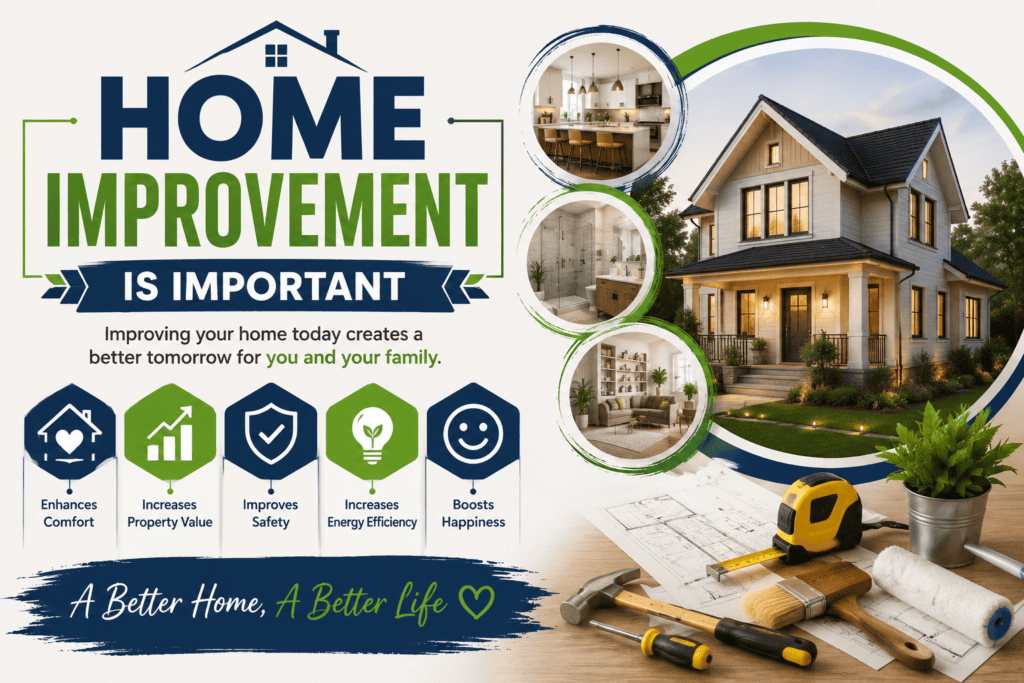
- Home improvement matters because it protects property value, prevents costly future repairs, improves efficiency, and supports daily comfort and safety.
- Small, proactive fixes are almost always cheaper than reactive repairs after a problem has grown.
- Home improvement spans maintenance, repair, improvement, and renovation — each with different cost and planning implications.
- Function should generally be prioritized alongside aesthetics; a beautiful space that doesn’t work well won’t hold up long-term satisfaction.
- Inspiration resources are useful for ideas, but cost, safety, and material decisions should be verified with local professionals.
Frequently Asked Questions
Why is home improvement important? It protects property value, prevents small issues from becoming expensive repairs, improves energy efficiency, and makes a home safer and more comfortable to live in day to day.
What’s the difference between home improvement and home renovation? Home improvement is a broad category that includes maintenance, repair, and upgrades, while renovation specifically refers to larger-scale changes to a space, like a full kitchen remodel.
How much should I budget for home improvement each year? Many professionals suggest setting aside around 1% of a home’s value annually for maintenance, though this varies based on the home’s age, systems, and condition.
What home improvement projects have the best return on investment? Projects like roof replacement, garage door updates, and minor kitchen remodels tend to return a high percentage of their cost at resale, though returns vary by region and market.
Do I need a permit for home improvement projects? Often, yes — especially for electrical, plumbing, or structural work. Requirements vary by location, so it’s worth checking with your local building department before starting.
Can home improvement lower my energy bills? Yes. Upgrades like better insulation, energy-efficient windows, and updated HVAC systems can meaningfully reduce monthly utility costs, though the payback period depends on the scope of the upgrade.
Should I DIY home improvement projects or hire a professional? Cosmetic projects like painting or minor fixture swaps are generally DIY-friendly. Electrical, plumbing, and structural work should go to a licensed professional for safety and code compliance.
Is mintpalhouse.com a good source for home improvement advice? It functions as a home-and-garden blog offering design ideas and project inspiration. As with any inspiration site, treat specific cost, material, or structural claims as a starting point and verify them locally before acting.
Conclusion
Why home improvement is important comes down to a simple idea: a home that’s maintained and thoughtfully upgraded costs less over time, functions better day to day, and holds its value more reliably than one that’s neglected. The most effective approach treats improvement as ongoing — prioritizing safety and efficiency first, then layering in the design choices that make a space feel like yours. Inspiration sources like mintpalhouse.com can help with the “what’s possible” part of that process, but the “how” — costs, permits, contractor selection — is worth confirming locally before you start.
Minimalist Home Decor Essentials