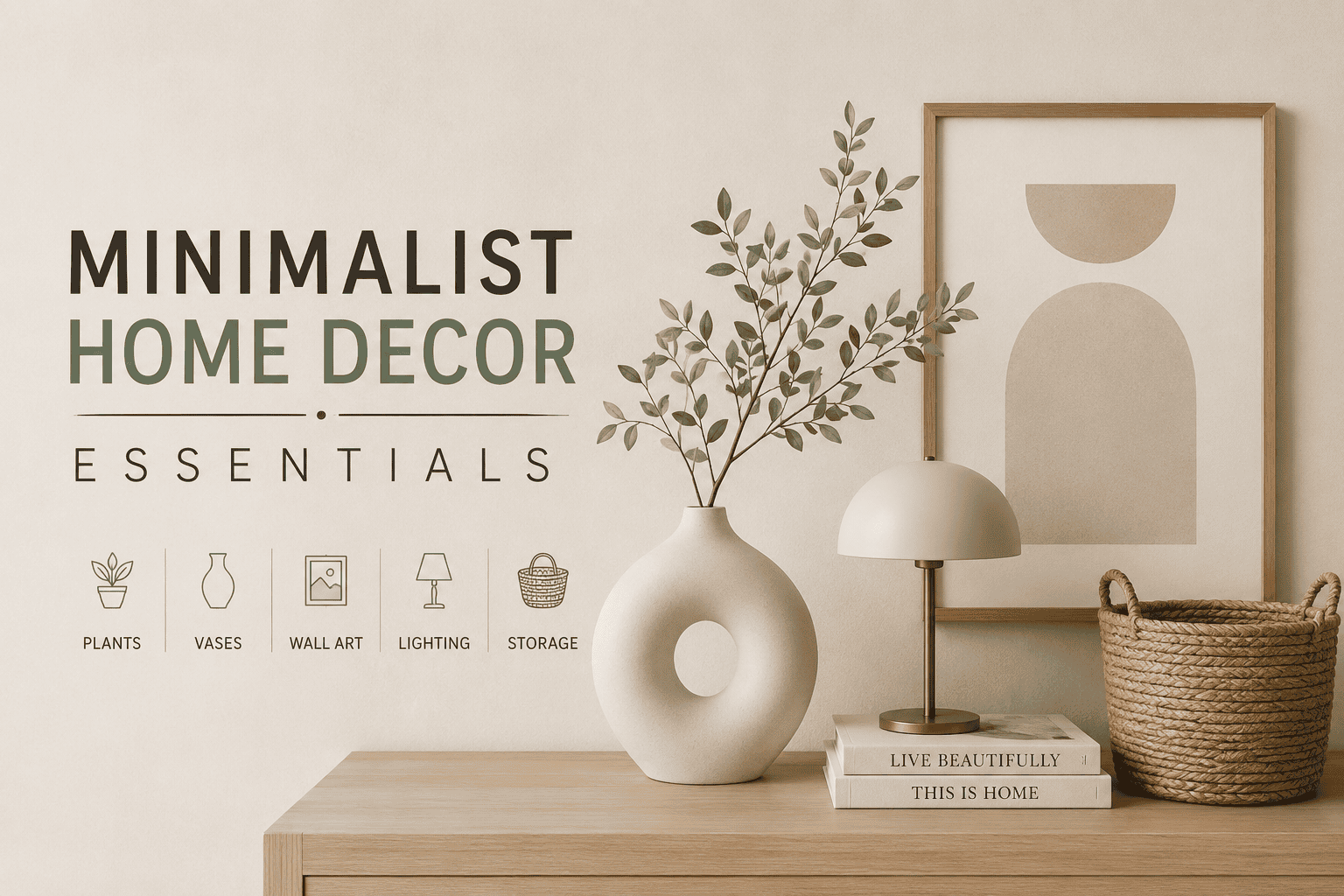
Minimalist Home Decor Essentials: A Practical Starter Guide
Minimalist home decor essentials are the small set of purposeful, well-made pieces — think a low-profile sofa, layered lighting, natural textiles, and closed storage — that replace clutter with calm. The goal isn’t emptiness; it’s keeping only what earns its place, so each room feels open, functional, and visually quiet. A minimalist space typically works with a neutral base palette, a few textured accents, and furniture chosen for both form and function
What Does “Minimalist” Actually Mean in Home Decor?
Minimalist home decor is a design approach built around intentionality: every object in a room should serve a clear purpose or bring genuine visual value. It’s not the same as “empty” or “cold” — a well-executed minimalist room can feel warm and lived-in, just without excess. The style draws from mid-century modern, Scandinavian, and Japandi influences, all of which prioritize clean lines, natural materials, and negative space.
Minimalism vs. Just “Decluttering” — What’s the Difference?
Decluttering is the process of removing excess; minimalism is the design philosophy that guides what you keep and how you arrange it. You can declutter a maximalist room and still end up maximalist — minimalism goes further, shaping furniture choice, color palette, and layout around restraint from the start.
The Core Categories of Minimalist Home Decor Essentials
Rather than chasing individual trendy items, it helps to think in categories. Each one plays a specific role in making a space feel intentional rather than sparse.
1. Foundational Furniture
What matters most: fewer pieces, better proportioned. Choose furniture with clean silhouettes — straight or gently curved lines, minimal ornamentation, and a scale that fits the room rather than overwhelming it.
- A low-profile sofa or sectional in a neutral tone (oatmeal, greige, or charcoal work well)
- A simple wood or stone coffee table without heavy detailing
- Open-frame or slim-legged chairs that don’t visually crowd a room
- A bed frame with a low headboard or none at all
2. Layered, Purposeful Lighting
Direct answer: Minimalist rooms rely on layered lighting — ambient, task, and accent — rather than one central overhead fixture, because layered light creates depth without adding visual clutter.
- A sculptural floor lamp as a focal point
- Recessed or track lighting for ambient coverage
- A single statement pendant over a dining table or kitchen island
- Warm-toned bulbs (2700K–3000K) to avoid a sterile, clinical feel
3. Natural Textiles and Layering
Minimalism can feel flat without texture, so textiles do a lot of the emotional work. Look for:
- Linen or cotton throw pillows in one or two tones
- A wool or jute area rug to ground the furniture
- A single textured throw blanket, rather than several competing patterns
- Curtains in a light, breathable fabric that lets natural light through
4. Closed and Concealed Storage
Direct answer: Closed storage — cabinets, drawers, and baskets with lids — is what actually makes a minimalist room possible, since visible clutter undoes the aesthetic even in an otherwise sparse space.
- Built-in or freestanding cabinetry with flush, handle-free fronts
- Woven baskets for items you use daily but don’t want on display
- A media console that fully conceals cords and electronics
- Drawer organizers to keep “hidden” storage from becoming its own mess
5. Intentional Wall Decor
Minimalist walls aren’t necessarily bare — they’re edited. One or two pieces with meaning or strong visual weight outperform a gallery wall of mismatched frames.
- A single large-scale piece of art or a framed print
- A mirror with a simple frame to add light and depth
- Negative space itself, left deliberately empty as a design choice
How to Choose a Minimalist Color Palette
| Element | Recommended Approach | Why It Works |
|---|---|---|
| Wall color | Warm white, soft greige, or light clay | Creates a calm backdrop without feeling stark |
| Furniture | 1–2 neutral tones per room | Prevents visual competition between pieces |
| Accents | One accent color, used sparingly | Adds interest without breaking cohesion |
| Metals/hardware | Stick to one finish (matte black, brass, or nickel) | Mixed metals can undercut the calm, unified look |
Common Mistakes When Trying to Go Minimalist
Buying too little, too fast. Stripping a room down to nothing and then buying whatever’s cheap to fill the gap often backfires — you end up with mismatched pieces that don’t serve the aesthetic. Minimalist decor works best built up slowly, piece by piece.
Confusing “minimal” with “boring.” Skipping texture and layering entirely leaves a room feeling cold rather than calm. Texture is what keeps minimalism from tipping into sterility.
Ignoring storage needs. A minimalist room with nowhere to put everyday items just relocates the clutter to countertops and floors. Storage should be planned before decor, not after.
Over-matching everything. A room where every material and tone matches exactly can feel showroom-like rather than lived-in. Slight variation — a warmer wood next to a cooler stone — keeps things feeling natural.
Best Practices for Building a Minimalist Space
- Start with function. Decide what each room needs to do before choosing what goes in it.
- Edit in rounds. Live with a space for a few weeks before adding new pieces — you’ll notice what’s actually missing versus what you assumed you needed.
- Invest in fewer, better pieces. A single well-made sofa or table will outlast several cheaper substitutes and reduces the temptation to accumulate.
- Anchor with one or two natural materials. Wood, stone, or linen used consistently across a room ties everything together.
- Leave visual breathing room. Not every wall or surface needs something on it — negative space is part of the design, not a gap to fill.
Minimalist Decor by Room: Quick Examples
Living room: Low sofa, one statement lamp, a wool rug, a single piece of wall art, and a closed media console.
Bedroom: Platform or low-profile bed, linen bedding in one or two tones, a small bedside table, and a woven storage basket instead of a dresser drawer overflow.
Kitchen: Handle-free or slim-pull cabinetry, a single pendant light over the island, and countertops kept clear except for one or two functional items like a wooden cutting board.
Home office: A simple desk without visible cable clutter, one task lamp, closed shelving instead of open bookcases, and a single plant for warmth.
Key Takeaways
- Minimalist home decor essentials fall into five core categories: furniture, lighting, textiles, storage, and wall decor.
- The goal is intentionality, not emptiness — every item should serve a clear function or add real visual value.
- Layered lighting and natural textiles are what keep minimalist spaces from feeling cold or sterile.
- Closed storage is essential; visible clutter undermines the aesthetic even in an otherwise sparse room.
- Build a minimalist space gradually, prioritizing fewer, better-made pieces over quick, low-cost fixes.
Frequently Asked Questions
What are the must-have items for minimalist home decor? The essentials are a low-profile furniture set in neutral tones, layered lighting (ambient, task, and accent), natural textiles like linen or wool, closed storage solutions, and one or two intentional wall decor pieces.
Is minimalist decor expensive? It can be, since the style relies on fewer, higher-quality pieces, but it’s also achievable on a budget by prioritizing key items — like a good sofa or lighting — and building the rest gradually rather than buying everything at once.
How do I make a minimalist room feel warm, not cold? Layer in natural textures — wool rugs, linen textiles, warm wood tones — and use warm-toned lighting (around 2700K–3000K) instead of stark white overhead light.
Can minimalist decor work in a small apartment? Yes, and it often works especially well in small spaces, since reducing visual clutter makes a room feel larger and more open than it would with heavier, maximalist furnishings.
Do minimalist rooms need to be all white? No. While white and neutral palettes are common, minimalism is more about restraint in the number of colors and materials used than about sticking to one specific shade.
How many decor items should a minimalist room have? There’s no fixed number — the standard is function and intentionality. A room can hold several items if each one serves a clear purpose, or very few if the space works better with negative space left open.
What’s the difference between minimalist and Scandinavian decor? Scandinavian decor is a specific style within the broader minimalist philosophy, typically adding more warmth through wood tones and cozy textiles (often called “hygge”), while minimalism more broadly emphasizes reduction and function across many possible aesthetics.
Is closed storage really necessary for minimalist decor? Yes — without a place to put everyday items, clutter tends to resurface on visible surfaces, which undercuts the calm, uncluttered look minimalism is meant to achieve.
Conclusion
Minimalist home decor essentials aren’t about owning as little as possible — they’re about choosing furniture, lighting, textiles, and storage that each earn a place in your home. Start with function, add texture and warmth deliberately, and resist the urge to fill every surface. Done well, a minimalist space feels calm and intentional rather than empty, and it tends to age better than trend-driven decor because the core pieces are chosen to last.