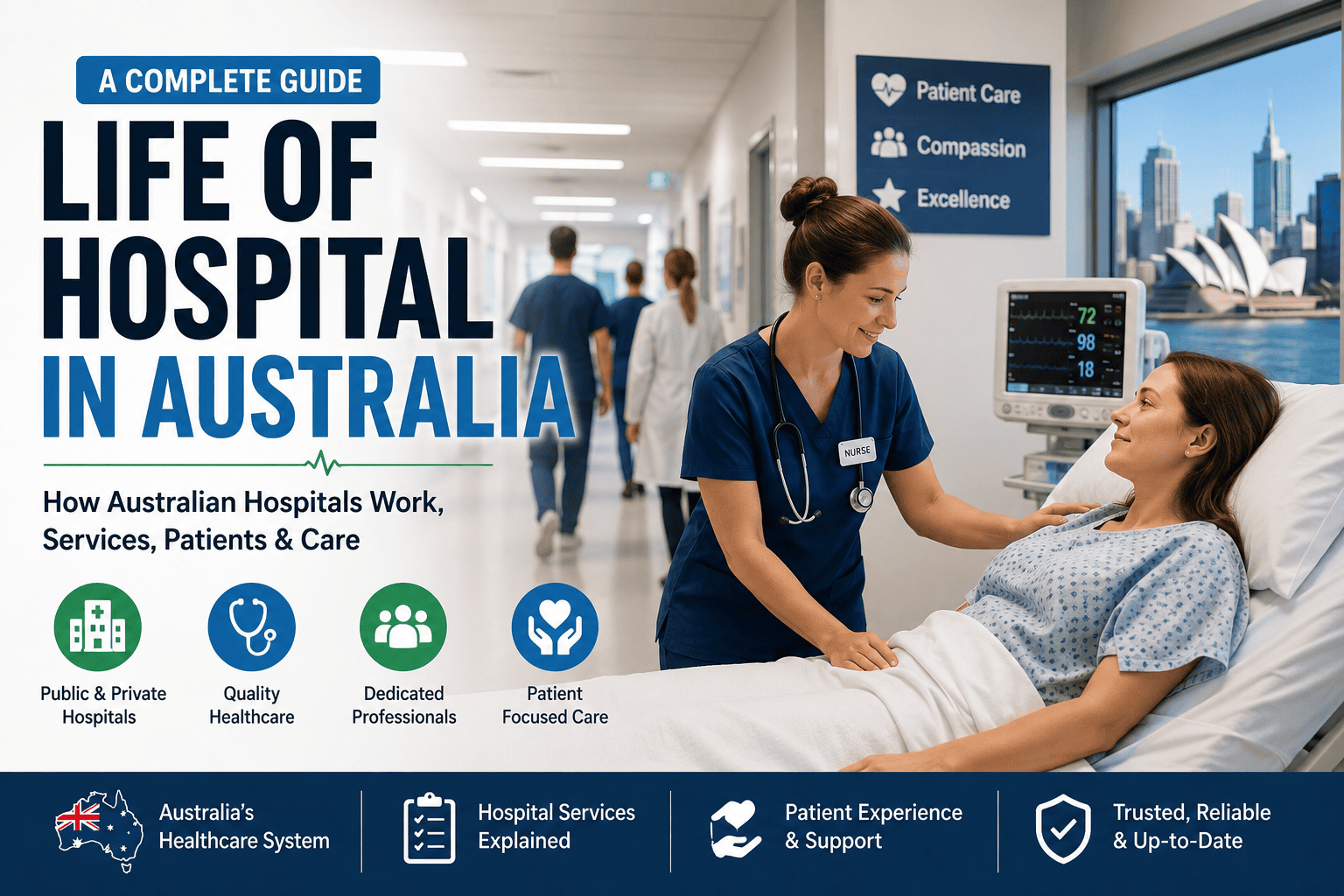
Life of Hospital in Australia: Amazing Complete Guide 2026
life of Hospital in Australia
Life of Hospital in Australia: How Australian Hospitals Work
The life of hospital in Australia is shaped by a combination of public and private healthcare, skilled medical professionals, emergency services, planned treatments and patient-focused care. Australian hospitals provide care for people with urgent medical needs as well as patients receiving planned surgery, maternity care, rehabilitation, mental health treatment and other specialised services.
Australia’s healthcare system is supported by Medicare, the country’s universal healthcare scheme, while state and territory governments play a major role in managing public hospitals.
Whether you are an Australian resident, a new arrival or simply researching the Australian hospital system, understanding how hospitals work can make the healthcare journey easier to navigate.
Quick Answer: What Is Life Like in Australian Hospitals?
The life of hospital in Australia involves continuous patient care, emergency treatment, planned procedures, nursing, medical consultations, diagnostic testing, rehabilitation and administrative work. Public and private hospitals operate differently, particularly in funding and patient costs, but both provide a wide range of healthcare services.
Public hospitals are largely managed by state and territory governments, while private hospitals are operated by private organisations. Public patients in public hospitals generally receive treatment without hospital charges, while private hospital care may involve private health insurance and out-of-pocket costs.
How Does the Australian Hospital System Work?
Australia has a public and private hospital system.
The Australian Government and state and territory governments share responsibility for the healthcare system. State and territory governments are primarily responsible for managing public hospitals, while the Australian Government contributes to their funding.
Hospitals provide both admitted and non-admitted care. An admitted patient has gone through a formal admission process, while non-admitted patients can include people visiting emergency departments or outpatient clinics.
Public Hospitals in Australia
Public hospitals are funded by both the Australian Government and state or territory governments.
For eligible public patients, treatment in a public hospital is generally provided without hospital charges. Public hospitals provide services ranging from emergency care and surgery to maternity, mental health, rehabilitation and intensive care.
In 2024–25, Australia recorded 12.8 million hospitalisations, with approximately 60% occurring in public hospitals.
Private Hospitals in Australia
Private hospitals are owned and operated by private organisations, including for-profit and not-for-profit providers.
Private hospital care is commonly funded through private health insurance, patient payments and other sources. People can receive treatment in a private hospital without private health insurance, but they may have to pay costs that are not covered by Medicare.
Private care can also provide patients with greater choice in some circumstances, including the choice of doctor or hospital, depending on the treatment and insurance arrangements.
What Happens During a Typical Hospital Visit?
A hospital experience varies depending on why a person needs care. Someone arriving with an emergency will have a very different experience from someone attending hospital for planned surgery.
A typical hospital journey may include:
- Registration or arrival
- Initial assessment
- Medical examination
- Diagnostic tests if required
- Treatment or procedure
- Monitoring and recovery
- Discharge or admission for further care
Emergency patients are assessed according to clinical urgency rather than simply being treated in the order they arrive.
For planned treatment, patients may receive instructions before arriving, complete admission paperwork and meet healthcare professionals involved in their care.
What Is Daily Life Like Inside an Australian Hospital?
Hospitals operate continuously because patients can need care at any time.
A typical day may involve nurses checking patients, doctors reviewing medical conditions, specialists conducting consultations, technicians performing diagnostic tests and allied health professionals supporting recovery.
Hospital teams can include:
- Doctors
- Nurses
- Midwives
- Surgeons
- Pharmacists
- Physiotherapists
- Occupational therapists
- Radiographers
- Laboratory professionals
- Paramedics
- Administrative staff
- Cleaning and catering teams
- Other support workers
The Australian health workforce operates across hospitals, clinics and community settings.
Morning in a Hospital
Mornings can be particularly busy.
Nursing teams may complete patient observations, administer prescribed medicines and prepare patients for procedures. Doctors and medical teams review patients and discuss treatment plans.
For patients staying overnight, breakfast, medication schedules and clinical assessments can all form part of the morning routine.
Afternoon in a Hospital
During the afternoon, hospitals may continue with scheduled procedures, diagnostic tests, specialist consultations and rehabilitation sessions.
Patients recovering from surgery may work with physiotherapists or other allied health professionals. Some patients may also be prepared for discharge if their condition has improved.
Evening and Overnight Care
Hospitals continue operating after normal business hours.
Nurses monitor patients throughout the night, respond to changes in condition and provide medication or other care when required. Emergency departments also continue receiving patients.
This continuous operation is one of the most important features of hospital life.
How Busy Are Australian Hospitals?
Australian hospitals manage a significant amount of healthcare activity every day.
According to the Australian Institute of Health and Welfare, the latest available data shows that Australian public and private hospitals together recorded 12.8 million hospitalisations in 2024–25. Hospitals also provided millions of days of patient care during the year.
On an average day, Australian hospitals recorded approximately:
| Hospital activity | Average per day |
|---|---|
| Hospitalisations | 35,000 |
| Emergency department presentations at public hospitals | 24,900 |
| Non-admitted services | 120,000 |
| Public hospital elective-surgery admissions | 2,200 |
These figures illustrate how much activity takes place across Australia’s hospital system each day.
What Types of Care Do Australian Hospitals Provide?
Australian hospitals provide many different types of care.
Emergency Care
Emergency departments provide assessment and treatment for patients who require urgent medical attention.
The level of urgency varies from life-threatening emergencies to conditions that require prompt but less immediate treatment.
Surgical Care
Hospitals perform both emergency and planned surgical procedures.
Private hospitals account for a substantial share of surgical hospitalisations, while public hospitals provide a wide range of emergency and planned surgical services. In 2024–25, there were about 3 million general intervention or surgical hospitalisations across public and private hospitals.
Maternity Care
Hospitals provide maternity and childbirth services, including care before, during and after birth.
In 2024–25, Australia recorded approximately 280,000 childbirth hospitalisations across public and private hospitals.
Mental Health Care
Some hospitals provide specialised mental health services for patients requiring hospital-based treatment and support.
In 2024–25, there were approximately 358,000 mental health hospitalisations across public and private hospitals.
Rehabilitation and Other Care
Hospitals can also provide rehabilitation, palliative care, sub-acute care and other specialised services.
The type of service available depends on the hospital, its location and its level of specialisation.
Public vs Private Hospitals in Australia
Understanding the difference between public and private hospitals is important when considering treatment options.
| Feature | Public Hospital | Private Hospital |
|---|---|---|
| Ownership | Mainly state/territory government | Private organisations |
| Main funding | Governments | Insurers, patients and other sources |
| Public patient care | Generally no hospital charge for eligible patients | Costs may apply |
| Private health insurance | Not required for public patient treatment | Commonly used |
| Choice of doctor | Depends on circumstances | Often greater choice |
| Emergency care | Available | Availability varies |
| Planned treatment | Available | Available |
The exact costs, eligibility and treatment arrangements can vary depending on the patient’s circumstances and the state or territory.
How Much Does Hospital Care Cost in Australia?
The cost of hospital care depends on whether a person receives treatment as a public or private patient and what services are required.
For eligible public patients in public hospitals, Medicare and government funding generally cover hospital treatment.
Private patients may have costs associated with hospital fees, doctors, specialists, insurance excesses and other services. Private health insurance can help cover eligible hospital costs, but policies differ significantly.
Before planned private treatment, patients should ask their hospital, doctor and insurer about expected out-of-pocket expenses.
What Role Does Medicare Play in Australian Hospitals?
Medicare is Australia’s universal healthcare scheme and forms an important part of the country’s healthcare system.
It helps fund medical services and contributes to hospital-related healthcare. Public hospital services are jointly funded by the Australian Government and state and territory governments.
However, Medicare does not mean that every healthcare service is automatically free. Costs can vary depending on whether care is provided publicly or privately and what type of service is involved.
What Are the Main Challenges Facing Australian Hospitals?
Australian hospitals provide extensive healthcare services, but the system also faces challenges.
The Australian Government identifies issues including rising healthcare costs, uneven access to services and hospital waiting times.
Access can also differ between major cities, regional areas and remote communities. Hospital resources, specialist availability and travel distances can influence the experience of patients in different locations.
Hospital Waiting Times
Waiting times can depend on the type of care required and how urgently a patient needs treatment.
Emergency departments prioritise patients according to clinical urgency. Planned procedures may involve waiting lists, particularly when demand is high.
Regional and Remote Healthcare
Australia’s large geography creates additional challenges for people living outside major cities.
Some regional and remote communities have fewer nearby specialist services, meaning patients may need to travel for certain treatments.
How Can Patients Have a Better Hospital Experience?
Patients can make their hospital experience easier by preparing where possible.
Before Planned Hospital Treatment
If your treatment is scheduled in advance:
- Follow the hospital’s preparation instructions.
- Bring identification and relevant documents.
- Keep a list of medicines you take.
- Ask questions about the procedure.
- Confirm whether you need someone to take you home.
- Ask about expected recovery and follow-up care.
- Check potential costs if you are being treated privately.
During Your Hospital Stay
Patients should tell healthcare staff if they experience new symptoms, discomfort or concerns.
It can also help to understand your treatment plan and know who to contact if you have questions.
Good communication between patients and healthcare professionals is an important part of safe and effective care.
Key Takeaways
- Australia has both public and private hospitals.
- Public hospitals are mainly managed by state and territory governments.
- Medicare is a central part of Australia’s healthcare system.
- Public patients in public hospitals generally receive hospital treatment without hospital charges if eligible.
- Private hospital treatment can involve private insurance and out-of-pocket costs.
- Hospitals provide emergency, surgical, maternity, mental health, rehabilitation and other specialised care.
- Australian hospitals manage millions of hospitalisations every year.
- Hospital experiences can differ depending on location, treatment type and whether care is public or private.
- Waiting times and access to services remain important challenges.
- Patients should understand their treatment arrangements and potential costs before planned care.
Conclusion
The life of hospital in Australia is a continuous combination of patient care, emergency response, planned treatment, medical services and teamwork. Australian hospitals form a major part of a healthcare system that combines Medicare, public hospitals, private hospitals and a wide range of healthcare professionals.
For patients, understanding the difference between public and private care, knowing how hospital visits work and asking about potential costs can make the healthcare journey easier to navigate.
Australia’s hospital system is large and complex, but its basic structure is straightforward: public and private providers work alongside government-funded programs and healthcare professionals to deliver care across metropolitan, regional and remote communities.
Frequently Asked Questions
What is the life of hospital in Australia like?
Hospital life in Australia involves continuous patient care, emergency services, planned procedures, nursing, medical consultations, diagnostic testing, rehabilitation and administrative work. Hospitals operate around the clock to care for patients with different medical needs.
Are Australian public hospitals free?
Eligible public patients generally receive hospital treatment without hospital charges in public hospitals. However, not every healthcare service outside the public hospital system is automatically free, so patients should check their specific circumstances.
What is the difference between public and private hospitals in Australia?
Public hospitals are mainly managed by state and territory governments, while private hospitals are operated by private organisations. Private hospital care commonly involves private health insurance or patient payments.
Does Medicare cover hospital treatment in Australia?
Medicare is a major part of Australia’s healthcare system and helps provide access to hospital and medical services. Eligible public patients receive treatment in public hospitals under the public system, while private treatment can involve additional costs.
How many hospitals are there in Australia?
The number depends on the definition and reporting year. AIHW reported 704 public hospitals in 2023–24, while hospital classifications and reporting can change over time.
How many people are admitted to Australian hospitals?
There were 12.8 million hospitalisations in Australia in 2024–25, including approximately 7.7 million in public hospitals and 5.1 million in private hospitals.
What services do Australian hospitals provide?
Australian hospitals provide emergency care, surgery, maternity care, mental health treatment, intensive care, rehabilitation, palliative care and other specialised services. The services available depend on the type and location of the hospital.
Can someone without private health insurance use a private hospital?
Yes. People can receive treatment in private hospitals without private health insurance, but they may need to pay costs that are not covered by Medicare. Patients should confirm expected costs before treatment.
Why do Australian hospitals have waiting times?
Waiting times can result from demand for healthcare, available hospital resources, staffing, specialist capacity and the urgency of individual cases. Emergency departments prioritise patients according to clinical urgency.
Are hospitals available outside Australia’s major cities?
Yes. Australia has hospitals and health services in regional and remote areas, although the size and range of services can vary. Some patients may need to travel to larger regional centres or major cities for specialised treatment.